-
OUR VISIT IN APRIL 2026
This month, we invite you to discover the Church of Panagia in Athens, Greece.
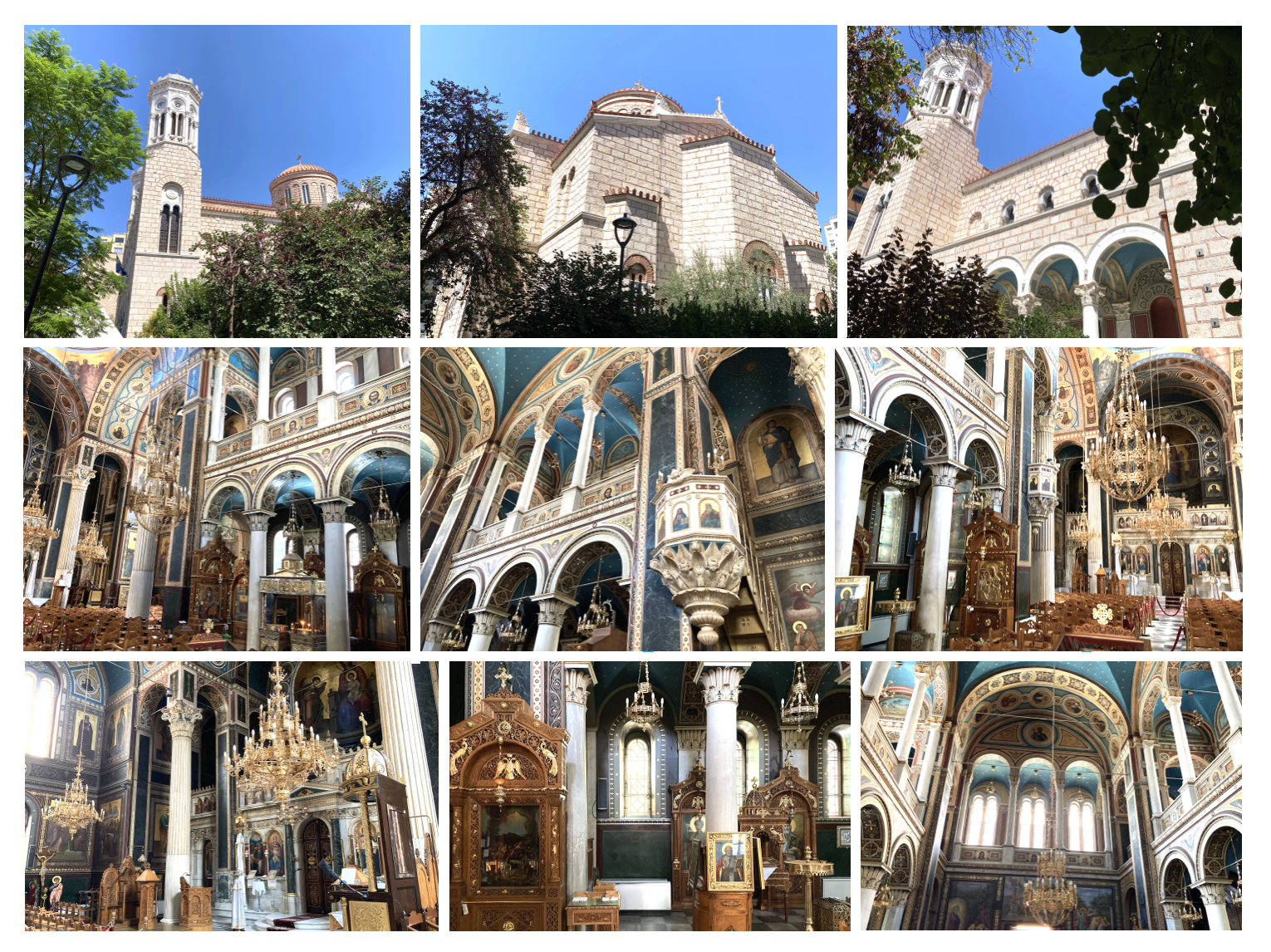
Photos and editing Hjlepetit (click on the image to enlarge it) In the heart of Athens’ historic center, on Aiolou Street, stands the Church of Panagia Chrysospiliotissa, one of the city’s most famous churches.
Dedicated to the Dormition of the Virgin (Kimissi Theotokou), it owes its name either to the Chrysospiliotissa Monastery, which contributed significantly to its construction, or to the icon of the Virgin, a faithful copy of the icon housed in that monastery.
The church’s plans were drawn up by the renowned architect Dimitrios Zezos, considered the originator of the Greco-Byzantine architectural style.
The foundations were laid in 1863, and construction was completed several years later, in 1892, primarily due to the project’s high cost, which was largely covered by donations from the faithful.
The church’s plan is that of a three-aisled basilica with two octagonal bell towers adjacent to the narthex.
It is a characteristic example of the eclectic style that dominated the 19th century, blending Neoclassical and Byzantine elements.
Brick walls and mullioned windows stand alongside acroteria and decorative marble features.
The church’s interior decoration was completed in 1892 and is the work of renowned artists of the time.
The Church of Panagia is celebrated on August 15th.
Text : Internet source

Association les Amis de la Chapelle de Saint ‑Maclou
"together let's restore and bring to life this old parish church of the 11th century"